История математики
Eratosthenes has found a simple method of exact calculation of length of a circle of the Earth, he possesses a calendar in which each fourth year has for one day more, than others. The astronomer the Aristarch has written the composition “About the sizes and distances of the Sun and the Moon”, containing one of the first attempts of definition of these sizes and distances; the character of the Aristarch’s job was geometrical.
The
greatest mathematician of an antiquity was Archimedes. He possesses
formulations of many theorems of the areas and volumes of complex
figures and the bodies. Archimedes always aspired to receive exact
decisions and found the top and bottom estimations for irrational
numbers. For example, working with a correct 96-square, he has
irreproachably proved, that exact value of number
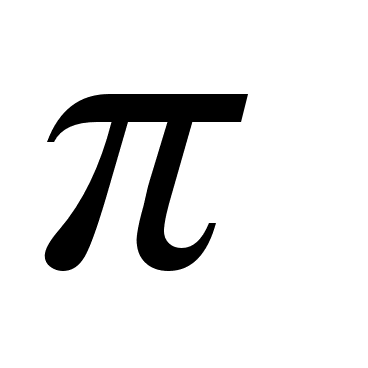 is between
3
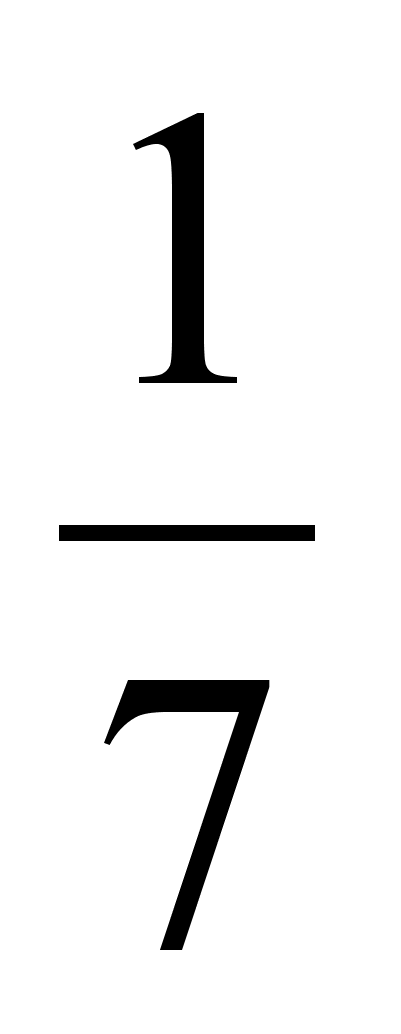 and 3
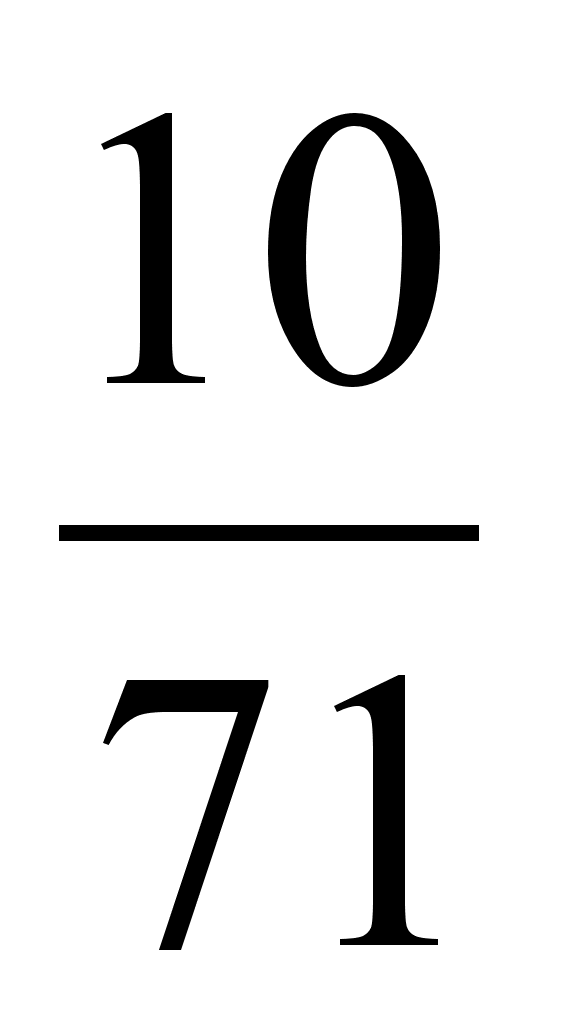 .
Архимед
has proved also some theorems, containing new results of geometrical
algebra.
Archimedes also was the greatest mathematical physicist of an antiquity. For the proof of theorems of mechanics he used geometrical reasons. His composition “About floating bodies” has put in pawn bases of a hydrostatics.
Decline of Greece. After a gain of Egypt Romans in 31 AD great Greek Alexandria civilization has come to decline. Cicerones with pride approved, that as against Greeks Romans not dreamers that is why put the mathematical knowledge into practice, taking from them real advantage. However in development of the mathematics the contribution of roman was insignificant.
INDIA AND ARABS
Successors of Greeks in a history of mathematics were Indians. Indian mathematics were not engaged in proofs, but they have entered original concepts and a number of effective methods. They have entered zero as cardinal number and as a symbol of absence of units in the corresponding category. Moravia (850 AD) has established rules of operations with zero, believing, however, that division of number into zero leaves number constant. The right answer for a case of division of number on zero has been given by Bharskar (born In 1114 AD -?), he possesses rules of actions above irrational numbers. Indians have entered concept of negative numbers (for a designation of duties). We find their earliest use at Brahmagupta’s (around 630). Ariabhata (born in 476 AD-?) has gone further in use of continuous fractions at the decision of the uncertain equations.
Our modern notation based on an item principle of record of numbers and zero as cardinal number and use of a designation of the empty category, is called Indo-Arabian. On a wall of the temple constructed in India around 250 AD, some figures, reminding on the outlines our modern figures are revealed.
About 800 Indian mathematics has achieved Baghdad. The term "algebra" occurs from the beginning of the name of book Al-Jebr vah-l-mukabala -Completion and opposition (Аль-джебр ва-л-мукабала), written in 830 astronomer and the mathematician Al-Horezmi. In the composition he did justice to merits of the Indian mathematics. The algebra of Al-Horezmi has been based on works of Brahmagupta, but in that work Babylon and Greek math influences are clearly distinct. Other outstanding Arabian mathematician Ibn Al-Haisam (around 965-1039) has developed a way of reception of algebraic solvings of the square and cubic equations. Arabian mathematics, among them and Omar Khayyam, were able to solve some cubic equations with the help of geometrical methods, using conic sections. The Arabian astronomers have entered into trigonometry concept of a tangent and cotangent. Nasyreddin Tusy (1201-1274 AD) in the “Treatise about a full quadrangle” has regularly stated flat and spherical to geometry and the first has considered trigonometry separately from astronomy.
And still the most important contribution of arabs to mathematics of steel their translations and comments to great creations of Greeks. Europe has met these jobs after a gain arabs of Northern Africa and Spain, and later works of Greeks have been translated to Latin.
MIDDLE AGES AND REVIVAL
Medieval Europe. The Roman civilization has not left an appreciable trace in mathematics as was too involved in the solving of practical problems. A civilization developed in Europe of the early Middle Ages (around 400-1100 AD), was not productive for the opposite reason: the intellectual life has concentrated almost exclusively on theology and future life. The level of mathematical knowledge did not rise above arithmetics and simple sections from Euclid’s “Beginnings”. In Middle Ages the astrology was considered as the most important section of mathematics; astrologists named mathematicians.
About 1100 in the West-European mathematics began almost three-century period of development saved by arabs and the Byzantian Greeks of a heritage of the Ancient world and the East. Europe has received the extensive mathematical literature because of arabs owned almost all works of ancient Greeks. Translation of these works into Latin promoted rise of mathematical researches. All great scientists of that time recognized, that scooped inspiration in works of Greeks.
The first European mathematician deserving a mention became Leonardo Byzantian (Fibonacci). In the composition “the Book Abaca” (1202) he has acquainted Europeans with the Indо-Arabian figures and methods of calculations and also with the Arabian algebra. Within the next several centuries mathematical activity in Europe came down.
Revival. Among the best geometers of Renaissance there were the artists developed idea of prospect which demanded geometry with converging parallel straight lines. The artist Leon Batista Alberty (1404-1472) has entered concepts of a projection and section. Rectilinear rays of light from an eye of the observer to various points of a represented stage form a projection; the section turns out at passage of a plane through a projection. That the drawn picture looked realistic, it should be such section. Concepts of a projection and section generated only mathematical questions. For example, what general geometrical properties the section and an initial stage, what properties of two various sections of the same projection, formed possess two various planes crossing a projection under various corners? From such questions also there was a projective geometry. Its founder - Z. Dezarg (1593-1662 AD) with the help of the proofs based on a projection and section, unified the approach to various types of conic sections which great Greek geometer Apollonius considered separately.
I think that mathematics developed by attempts and mistakes. There is no perfect science today. Also math has own mistakes, but it aspires to be more accurate. A development of math goes thru a development of the society. Starting from counting on fingers, finishing on solving difficult problems, mathematics prolong it way of development. I suppose that it’s no people who can say what will be in 100-200 or 500 years. But everybody knows that math will get new level, higher one. It will be new high-tech level and new methods of solving today’s problems. May in the future some man will find mistakes in our thinking, but I think it’s good, it’s good that math will not stop.
Bibliography:
Ван-дер-Варден Б.Л. «Пробуждающаяся наука». Математика древнего Египта, Вавилона и Греции. МОСКВА, 1959
Юшкевич A.П. История математики в средние века. МОСКВА, 1961
Даан-Дальмедико А., Пейффер Ж. Пути и лабиринтыю Очерки по истории математики МОСКВА, 1986
Клейн Ф. Лекции о развитии математики в XIX столетии. МОСКВА, 1989