The development of sustainable tourism in Turkey
Since the tourism sector in Turkey was relatively new, there has been the opportunity to preserve natural, cultural, historical and archaeological assets of the country. Most of the prime tourism regions remain unspoiled, in spite of the rapid growth in arrivals. Contrary to some other countries, which suffered from saturation, improper development, a seriously damaged environment and many valuable natural assets as well as existing human settlements, Turkish tourism was prepared to develop in sustainable way. In order to develop sustainable tourism, the Ministry of Tourism determined certain principles (Arac 2001), such as suitable use of natural and cultural resources, continuous restoration and maintenance of the natural and cultural resources and protection of the tourists and hosts against adverse environmental effects (Ministry of Tourism 1994).
One of the first attempts to promote sustainable tourism was already in 1989, when the Ministry of Tourism launched the ATAK project (Southwest Coast Environmental Project). The aim was to provide environmental protection along Aegean and Mediterranean coastlines and to determine the deficiencies in infrastructure system. The main objectives of the project covered a wide range of issues such as planning, designing and construction of water supply and sewerage systems; wastewater treatment and disposal facilities; solid waste disposal facilities; and pollution control studies (Kьce 2001; Arac 2001).
In general, Turkish tourism policies are aiming to extend the economic benefits from tourism to the people, while ensuring that policies in the same time environmentally sound and sustainable. Some of the tasks that The Ministry of Tourism are trying to carry out are elaboration and approval of land use plans in tourism areas and centres, the promotion of the country abroad and the follow-up the intervention of governmental bodies, local administrations, professional associations; and unions and non-governmental organizations (Ministry of Culture and Tourism).
Turkey has gradually put in action a body of legislation concerning tourism in order to regulate the establishment and operation of tourism operators, promote tourism development, protect and preserve certain vulnerable areas, and provide financing for certain projects requiring heavy investment.
The Ministry of Culture and Tourism strategy
Turkey's tourism sector faced rapid growth, especially after 90’s, due to mass tourism. This occurs mainly because tourists, which are coming to Turkey, choosing this place because of its geographical location and the 3 S's –sun, sea, and sand. Furthermore, Turkey has the facilities needed to host mass tourism, and also has the “all inclusive” system of the last few years for attracting the tourists, with relatively high service. The latest strategy is to attract a smaller and more elite group of tourists rather than a large crowd that spends less, in case to reorganize mass-tourism into sustainable one. Conferences, boutique hotels, hunting, scuba diving, golfing, yachting and mountain climbing are the most important elements in this latest strategy. If the Ministry's “Turkey's Tourism Strategy 2023” plan can be implemented and diversified, Turkey's dependence on mass tourism will disappear and the sector will be able to contribute to the economy in every season of the year.
As the document describes itself,” tourism strategy of Turkey- 2023 is an effort that aims at providing extensions to management and implementation of strategic planning efforts and boosting the cooperation between public and private sectors of tourism with reference to the principle of “governance”.”
The Ministry of Culture and Tourism of Turkey defines the following problems in today’s situation:
Developments towards mass tourism activities and particularistic approaches to tourism planning in Turkey have led to:
Mass concentration at the Mediterranean and Aegean Coastal areas
Distorted urban development house-building in back-shore and adjacent areas
Deficient Infrastructure and environmental problems
In an effort to convert this adverse structure into a positive, favourable one, an integrated policy and strategy and application based approaches are being set within the scope of Tourism Strategy of Turkey-2023.
Turkey has set out plans for its tourism industry in the years leading up to 2023, when it will celebrate the 100th anniversary of the founding of the Turkish Republic.
As Turkey's undersecretary of tourism and culture, Ismet Yilmaz, said “the country could attract 50m foreign visitors a year and $50bn (Ј25.2 billion) in revenue by 2023.” However, he stressed that Turkey may have to move away from the current dominant model of tourism to achieve its goals, (Today's Zaman, 03 March 2008 ) “For this to happen, the weight of sun, sea and sand tourism should shrink in the total tourism revenue figures while the share of other types of tourism increases,” Mr Yilmaz said. The minister added that, as well as establishing new resorts to attract wealthier visitors, the Turkish tourism industry would have to increase capacity in accommodation facilities to at least 1.25m beds. Turkey must also have a fleet of 500 planes, Mr Yilmaz predicted, as well as 5m people working in the tourism industry, ten conference centres, 40 marinas and 25 seaports.
The Culture and Tourism Ministry, which has completed its tourism strategy for the centennial of the Republic of Turkey in 2023, will create nine culture and tourism zones and seven tourism development corridors. By 2023, 10 tourism cities, 11 cruise ports, nine marinas and one airport will be part of the first leg of the tourism strategy; the first leg will be completed in 2013.
Turkey, which seeks to increase its bed capacity to 1.5 million, and the number of tourists visiting the country to 40 million in 2013, also plans to attract $50 billion in revenue from tourism activities involving foreign tourists. The goal for domestic tourism is $20 billion. Turkey, which plans to secure $1,000 in revenue per tourist, is set to make one of the biggest jumps in tourism in Europe.
The tourism strategy, implemented in coordination with the Transportation Ministry, State Planning Organization (DPT), Ministry of Public Works and Settlement, and Ministry of Energy and Natural Resources, requires a review of all coastlines of Turkey. (01 February 2009, Εrcan Yavuz, ANKARA)
The strategy of the Ministry of Tourism and Culture of Turkey, to develop the new level of tourism is “to exhibit a planning approach that supports economic growth, is physically applicable and socially oriented and fairly reflects the principle of sustainable tourism”
The vision of the Turkey is “with the adoption with sustainable tourism approach tourism and travel industry will be brought to a leading position for leveraging rates of employment and regional development and it will be ensured that Turkey becomes a world brand in tourism and a major destination in the list of the top five countries receiving the highest number of tourist and highest tourism revenues by 2023”
The introduced document provides some suggestions to realize the vision, such as creating tourism products based on tourist profile, to strengthen international cooperation, to help increase the competitiveness of the tourism sector through creation of regional tourism brands rather than relying upon cheaper products, so on.
The document breaks down the individual actions on the following schedule, according to their implementation priority and expected returns on the timeline.
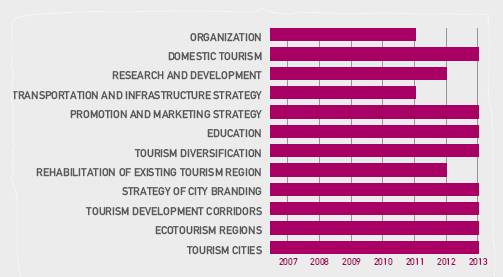
Table 7:Tourism strategy of Turkey-2023 Implementation phase
Source: The Ministry of Tourism and Culture of Turkey
Hypothesis
The second research question is:
Is Turkey becoming a world brand in tourism and has the possibility of becoming the major destination in the list of the top five countries receiving the highest number of tourist?
With its objectives:
+Examination of the world brands in tourism
+Examination of possibilities and opportunities of Turkey to become the major description in the list of the top 5.
Word brands in tourism
The World Tourism Organization reports the following ten countries as the most visited in 2007 by number of international travelers. When compared to 2006, Ukraine entered the top ten list, surpassing Russia, Austria and Mexico. Most of the top visited countries continue to be on the European continent.
Out of a global total of 903 million tourists in 2007, the following countries are the most visited.
Rank Country International tourist arrivals
1 France 81.9 million
2 Spain 59.2 million
3 United States 56 million
4 China 54.7 million
5 Italy 43.7 million
6 United Kingdom 30.7 million
7 Germany 24.4 million
8 Ukraine 23.1 million
9 Turkey 22.2 million
10 Mexico 21.4 million
www.
In arrivals, France holds to its first position ahead of Spain and the USA, while in receipts the USA ranks first, France third and Spain maintains second place. China and Italy alternate in 4th and 5th position, in both rankings followed by UK and Germany(UNWTO World tourism barometr) .
France
France attracted 81.9 million foreign tourists in 2007 (surpassing its population), a 3.8% increase compared to 2006, making it the most popular tourist destination in the world.[1] This 81.9 million figure excludes people staying less than 24 hours in France, such as northern Europeans crossing France on their way to Morocco , Spain or Italy in summer.(www.)
France’s tourism policy is conducted by the Minister of State, attached to the Minister for the Economy, Finance and Employment, responsible for Consumer Affairs and Tourism. It was essentially defined at two interministerial committee meetings on tourism in 2003 and 2004 and has three major thrusts:
·Strengthening France as a destination so as to increase tourist visits;
·Furthering the tourism economy by adapting what France has to offer to tourists’ demands through quality-related measures;
·Better ensuring access for everyone to holidays in promoting social tourism.
Tourism is a pillar of the French economy, it accounts for 6.3% of GDP and
generates 2 million jobs directly or indirectly. Tourism is the third leading sector when it
comes to job creation. Tourism revenues stood at ?35 billion in 2006 versus ?32.8 billion in
2004. (Ministry of Foreign and European Affairs, 2007)
Spain
Spain is the world's second biggest tourist destination after France. The tourism sector accounts for about 11 per cent of the country's jobs and gross domestic product. Tourism in Spain was developed during the last years of Francisco Franco’s dictatorship, when the country became a popular place for summer holidays, especially for tourists from the United Kingdom, France, Germany and Scandinavia. Since then Spain has been the second most visited country of the world after France. In 2007 almost 60 million foreign tourists were received, according to tthe World Tourism Organization, that has its headquarters in Madrid. Spain's tourism spending annually is over Ј46 Billion, the highest tourism spending in any nation worldwide except the USA with $74 Billion.
(www.)
Gross Domestic Product (GDP)
The contribution of Travel & Tourism to Gross Domestic Product is expected to decline from 16.3% (EUR180.3 bn or US$251.5 bn) in 2009 to 15.0% (EUR297.6 bn or US$380.5 bn) by 2019.
Employment
The contribution of the Travel & Tourism economy to employment is expected to fall to 3,381,000 jobs in 2009, 17.0% of total employment or 1 in every 5.9 jobs to 3,827,000 jobs, 15.6% of total employment or 1 in every 6.4 jobs by 2019.
Growth
Real GDP growth for Travel & Tourism economy is expected to be -4.9% in 2009 and to average 1.9% per annum over the coming 10 years.
(The World Tourism & Travel Council, wttc )
United States
Tourism in the United States is a large industry that serves millions of international and domestic tourists yearly.
The travel and tourism industry in the United States was among the first commercial casualties of the September 11, 2001 attacks, a series of terrorist attacks on the US. In the US, tourism is either the first, second or third largest employer in 29 states, employing 7.3 million in 2004, to take care of 1.19 billion trips tourists took in the US in 2005. As of 2007, there are 2,462 registered National Historic Landmarks (NHL) recognized by the United States government. As of 2008, the most visited tourist attraction in the US is Times Square in Manhattan, New York City which attracts approximately 35 million visitors yearly. (www.)
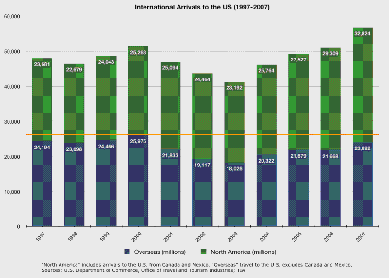
Table 8: International Arrivals to the Us (1997-2007)
Gross Domestic Product (GDP)
The contribution of Travel & Tourism to Gross Domestic Product is expected to rise from 9.5% (US$1,356.9 bn) in 2009 to 9.8% (US$2,358.0 bn) by 2019.
Employment
The contribution of the Travel & Tourism economy to employment is expected to rise from 13,850,000 jobs in 2009, 9.7% of total employment or 1 in every 10.3 jobs to 15,552,000 jobs, 10.1% of total employment or 1 in every 9.9 jobs by 2019.
Growth
Real GDP growth for Travel & Tourism economy is expected to be -4.2% in 2009 and to average 3.3% per annum over the coming 10 years.
(The World Tourism & Travel Council, wttc )
China
China has become a major tourist destination, especially since its opening to the world in the late 1970s. In 1978, China received about 230,000 international foreign tourists, mostly because of the severe limitations that the government placed on who was allowed to visit the country and who was not.In 2006, according to the UNWTO, China received 49.6 million international visitors, making it the fourth most visited countries in the world.
While the gap between the massive luxury hotels in the big cities and the more limited facilities elsewhere, hotel building continues apace. The number of tourist hotels shot up from 5,782 in 1998 to 8,880 by 2002.