Use of the Topical Project Work “My Body” for Developing All Language Skills in Form 4
4.1 The Results of the Questionnaire
To study the types of the students’ intelligences in the class, according to the first stage, the investigation was carried out. In order to do that the students were asked to answer the questions. (Appendix 2)
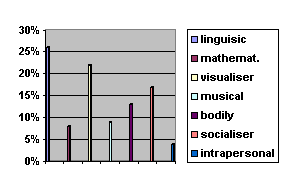
Figure 1. Types of the Intelligences in Form 4
Figure 1 shows the result of the questionnaire where the vertical axis reflects the percentage of the students’ intelligences in 4-d class.
It turned out that the most part of the learners had linguistic, visual and socialiser intelligences. So, refering to the Gardner’s table of intelligences (see Chapter 2) it is possible to conclude that 6 learners like to read, write and tell stories; 2 learners like to do experiments, ask questions; 5 learners like to draw, look at pictures; 2 learners like to sing, listen to music; 3 learners are good at physical activities; 4 learners like to join groups; 1 learner is the best by having own space.
It was also interesting to find out what the students felt concerning their abilities to speak and read in English. The respondents were to choose the statement according to their feeling:
Speaking in English:
I speak as much as possible
I should speak more
I want to speak but I am afraid
Reading in English:
I can understand the main idea
I understand partly, I need help
I understand very little
So, 14 respondents out of 23 confessed that they were afraid to speak in English and 10 respondents out of 23 understood very little while reading in English.
Having generalized the results of the questionnaire and interviews with the students the following conclusion can be drawn. The teacher can use project work for developing all language skills. So, the next step to make was to complete a set of activities and tasks for the theme “My Body” according to the students’ types of intelligence.
4.2 The Implementation of the Project Work “My Body” in Form 4
In order to develop all language skills according to the students’ types of intelligence, to motivate students to learn the language a set of activities and tasks was worked out.
Having studied the advantages and disadvantages of the project work and work in big classes it was decided to organise the class into groups and pairs.
The cognitive aim of the topic “My Body” was to review the knowledge about the body in English and through activities gain understanding of new information. Pupils were also expected to substantially develop their co-operative skills while working in pairs and in groups.
Table 2 reflects the summary of the activities used for developing four language skills. This material was designed for young children.
TABLE 2. Activities for the Topic “My Body”
| Description of activity | Teacher’s Language | Language Skills Focus |
| 1.Sing song and do the actions | Nose, head, shoulders, etc. | Listening, speaking skills |
| 2.Drawing the parts of the body |
“Show me…” “What is it?” |
Speaking, writing, listening skills |
| 3.To listen to the dialogue | Helping with difficult words | Listening and speaking skills |
| 4. Mime-show | Introduce new words | Speaking, writing, reading, listening skills |
| 5. Measuring your body | Giving instructions | Speaking, listening, reading, writing skills |
| 6. English food |
Giving key words. “What is different about English food?” |
Reading, listening, speaking skills |
| 7. Game “Healthy Food for Healthy Body” | Questions about the text | Speaking, listening, writing |
| 9.“Table Manners” | Helping with new and difficult words | Reading, speaking, writing, listening |
| 10. Test | Read the first task | Listening, writing, reading, skills |
Before the first lesson of the project work the author prepared a large chart which was attached to one of the walls of the classroom. In this chart the pupils were supposed to show their opinion after each lesson by drawing an appropriate face:
I like the activities in the lesson
I partly like the lesson
I did not like the activities
The first project task was begun with the song “Head and Shoulders”. (Appendix 3) Children sang and touched the body parts mentioned in the song.
The next step was work in pairs. Pupils were showed the parts of the body each other, were drawing and writing the parts of the body in their notebooks. It was done in the form of game. (Appendix 4)
Further, the teacher asked the children to listen to the dialogue and try to understand what the children were talking about. They also were supposed to discuss the dialogue, explain the phrases and words pupils did not understand.
Then the teacher planned work in pairs:
they mimed having a headache/earache/backache;
the children tried to guess what was wrong with them by asking “Are you ill?” or “What is the matter?”
Later the children wrote the new words and expression in the notebooks. They read in pairs about little John – decided whether little John was really ill, practised the short answers [ Pupil’s book “Enjoy 2”]
Work in groups: the teacher used Worksheet 1 (Appendix 5) for each group to fill in, introduced new words: weight, height, length, width.
The teacher together with the nurse weighed the pupils and measured their height pupils in the medical room of the school.
When Worksheet 1 was completed in groups, the pupils could repeat their results to their classmates at the second project lesson.
Work in pairs: What is different about English food? – children read the text (Appendix 6) They consolidated the vocabulary about food/likes and dislikes; discussed on good and bad food, and clarified ideas about the “Pyramid of Food”. (Appendix 7)
Work in groups: in this activity was used Worksheet 3 for making group pictures “Healthy Food for Healthy Body”. (Appendix 8)
Finally, the learners were offered to write “Table Manners” using words: dirty, hands, mouth, do not, fork, spoon, knife, hear, etc. (Appendix 9)
4.3 Analysis of the Results
When all these numerous tasks and activities were successfully performed, the author of the case study summarised the results of the students’ opinion about them.
TABLE 3. Self-assessment
| Lessons | I like activities at the lesson | I partly like the lesson | I did not like the activities |
| 1- lesson | 10 | 7 | 6 |
| 2- lesson | 15 | 4 | 4 |
| 3- lesson | 16 | 5 | 2 |
| 4- lesson | 16 | 4 | 3 |
| 5- lesson | 18 | 5 | 0 |
| 6- lesson | 20 | 3 | 0 |
Table 3 shows that 20 students out of 23 liked the activities, 3 students out of 23 partly liked the activities at the project lessons. It proves that activities at the project lessons were used successfully.
In order to observe a progress of the students’ knowledge an achievement test was suggested, which consisted of 3 exercises.(Appendix 10)
In those tasks the students had to demonstrate their knowledge of the new vocabulary which were used in the topic “My Body”.
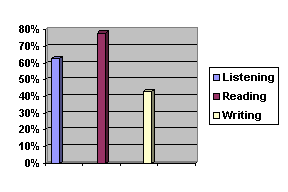
Figure 2. The Result of the Achievment Test
Figure 2 shows the results of the test, where the vertical axis reflects the percentage of development of the students’ skills. According to the final test 15 students out of 23 are good listeners, 18 students out of 23 are good readers, 10 students out of 23 are good writers.
Finally, at the end of the project work the respondents were to choose the statment according to their feeling:
Speaking in English:
I speak as much as possible
I should speak more
I want to speak but I am afraid
So, only 7 respondents out of 23 confessed that they were afraid to speak in English. (see Chapter 4.1)
To compare the results of the first questionnaire with the final test the following conclusion can be drawn out that significant progress in training all language skills has been made. The results of the project work “My Body” showed that the pupils self-activity and potencial self-realization were grown.
Conclusion
Needless to say that the English language has become very popular today. About 350 million people speak English as its first language. It is an official language in 44 countries. It is the dominant language of the medicine, electronics and space technology. A foreign language is not just a subject learnt in the classrooms. It is something which is used in real life situations. Project work is one of the teaching methods teachers can use for teaching the English language during learning process.
The aim of the Paper was to stimulate the interest in studyng the English language and to improve the skills and knowledge of pupils with the help of project work “My Body”.
The objectives of the Paper have been completed:
metodological literature on teaching English through project works has been studied;
the case study has been carried out;
the results of the case study have been analyzed.
The research that was carried out based on the analysis of the theoretical literature and completed tasks and activities for the project work “My Body”, allowed the author to ascertain that the hypothesis of the Paper has been proved, that the effective use of the project work successfully develops all language skills of young learners. The study proved also that the project work elevated the effectiveness of learning English.
Project work includes a lot of practical activities through which learners develop all skills and knowledge even in different school subjects. Project work is an example of the co-operative learning. In big classes it is possible to organise dynamic and creative teaching with the help of such teaching/learning organization forms as pair and group work.
Bibliography
1. Cooper, J.O., & Edge, D. Parenty “Strategies and Educational Methods” Columbus, Ohio: Charles E. Merrill, - 1981,- 250 p.
2. Edge, Julian. “Cooperative Development”. Longman, - 1992,- 106 p.
3. Janet Ever “Cross –curricular Topics in Teaching English to Young Learners RaKa, 2002
4. Feldman, G.G. “Speech and Language Service” Reston,VA: 1997, - 376 p.
5. Jill Hadfield “Elementary Vocabulary Games”. Longman, - 1998.
6. Jemery Harmer “How to Teach English”. Addison Wesley Longman, !998, - p.87-96 . – p.115-119
7. Haines, Simon.” Projects for the EFL Classroom”. Edinburgh: Nelson, 1989, -108 p.
8. Hutchinson, Tom, Project English 2, Teachers Book. Oxford, University Press,, 1986, - 120 p.
9. Longman Dictionary of English Language and Culture. Longman Group UK Limited, -1982, GB, -1528 p.
10.Legutke, Michael & Thomas, Howard. Process and Experience