Years of UN peacekeeping efforts
Kofi Annan
United Nations Secretary General
Kofi Atta Annan, current Secretary General of the United Nations, is a native of Ghana -- at the time of his birth, still a British colony called the Gold Coast. He was born April 8, 1938, in Kumasi, the descendant of a prominent family of paramount chieftains of the Fante people.. Annan began his education at a Ghanaian university, then completed a degree in economics at Macalester College in St. Paul, Minn. He pursued graduate studies in Geneva at the Institut Universitaire de Hautes Etudes Internationales. Again in the United States, Annan earned an M.S. in management at the Massachusetts Institute of Technology.
By 1971, Annan had joined the United Nations.
His experience includes positions as Assistant Secretary General for Program Planning, Budget and Finance, head of human resources and security coordinator, director of the budget, chief of personnel for the High Commission for Refugees and administrative officer for the Economic Commission for Africa.
He was named Under Secretary General for Peacekeeping Operations on March 1, 1993. In the peacekeeping post he did, however, take on a number of delicate and complex jobs. He was sent to Iraq to negotiate the release of hostages and the safe transport of a half-million Asian workers who had become stranded in that area. As representative of the UN Secretary General in Bosnia., he negotiated his way among the four powers who had intervened in Bosnia -- the United States, Britain, France and Russia.
On the evening of December 13, 1996, Annan was named Secretary General of the United Nations -- the first black African to hold the job.
In the future, Annan will grapple with the problem of gaining support for the United Nations from the organisation's sceptics, especially the U.S. Congress.
Appendix D
|
Membership and Presidency of the Security Council in 1998 |
||
|
Month |
Presidency |
Membership Term Ends |
| January | France | Permanent Member |
| February | Gabon | 31 December 1999 |
| March | Gambia | 31 December 1999 |
| April | Japan | 31 December 1998 |
| May | Kenya | 31 December 1998 |
| June | Portugal | 31 December 1998 |
| July | Russian Federation | Permanent Member |
| August | Slovenia | 31 December 1999 |
| September | Sweden | 31 December 1998 |
| October | United Kingdom | Permanent Member |
| November | United States | Permanent Member |
| December | Bahrain | 31 December 1999 |
| Brazil | 31 December 1999 | |
| China | Permanent Member | |
| Costa Rica | 31 December 1998 |
Appendix E
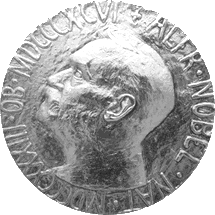
The United Nations was established in the aftermath of a devastating war to help stabilize international relations and give peace a more secure foundation.
The Nobel Peace Prize has been awarded five times to the United Nations and its organizations.
Appendix F
Country Profile
Iraq
-
General
Size: 437,072 sq. km Location: Middle East Population: 21.4 million Government: Republic Leader: President Saddam Hussein
-
People
 Languages
Arabic, Kurdish (official in Kurdish regions), Assyrian, Armenian Major Religions Muslim 97% (Shi'a 60%-65%, Sunni 32%-37%), Christian or other 3% Ethnic groups Arab 75%-80%, Kurdish 15%-20%, Turkoman, Assyrian or other 5% Growth rate 3.69% Birth rate 43.07 births/1,000 Death rate 6.57 deaths/1,000 Fertility rate 6.41 children/woman Male life expectancy 65 Female life expectancy 68 Infant mortality rate 60 deaths/1,000 live births Economy
Labor
force4.4 million Unemployment rate N/A Inflation Rate N/A Gross domestic product (total value of goods and services produced annually) $41.1 billion (1995 est.) Budget N/A Debt $50.0 billion (1989) Exports N/A Imports N/A Defense spending N/A Highways 45,554 km (1989)
A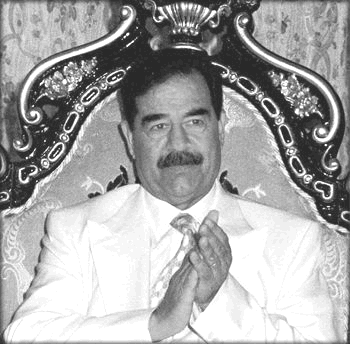 ppendix
G
Saddam Hussein
President of Iraq
1 Blitzkrieg (Ger.) – lightning war, traced back to WW II