Теория социокультурных систем english
(from the second half of theVII century until late XII century)
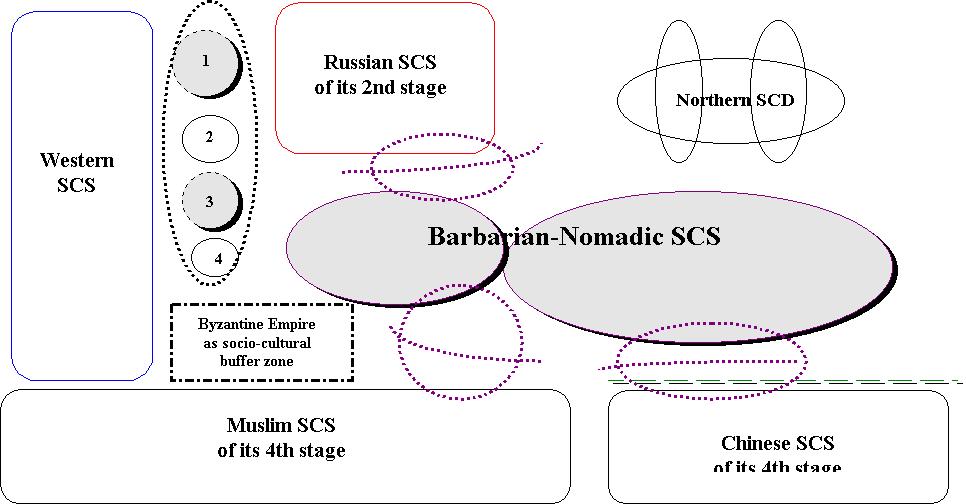
Model
5. Socio-cultural integration of Barbarian-Nomadic SCS with all the neighbouring, accessible to it SCS-s.
Socio-cultural assimilation of the Barbarian-Nomadic SCS territory and population into these SCS
 (late XII century -
1380-s)
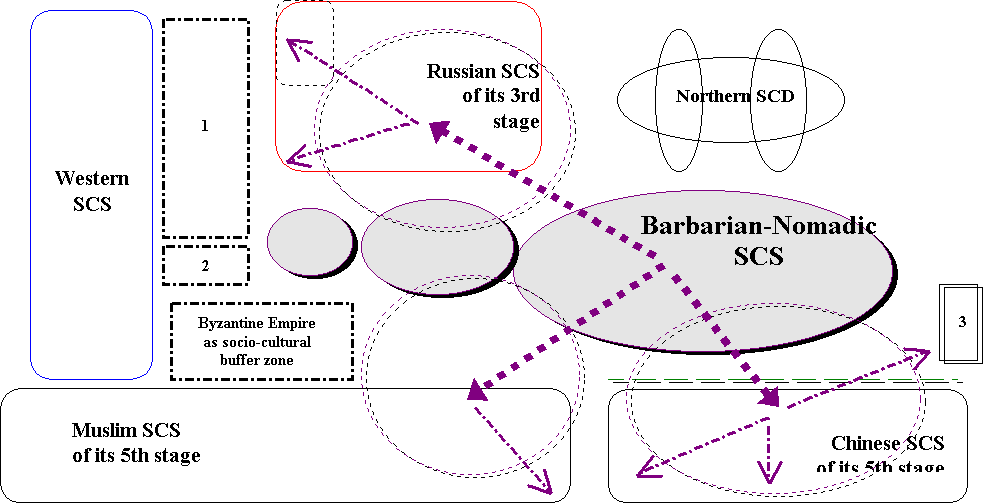
Model 6. Rise of the Barbarian-Nomadic SCS residual homeland and population.
Conflict of various neighbouring SCS-s for its socio-cultural assimilation, with the Barbarian-Nomadic SCS itself marionette participation in the process (1380-s - middle of the XX century)
 | |||
 | |||
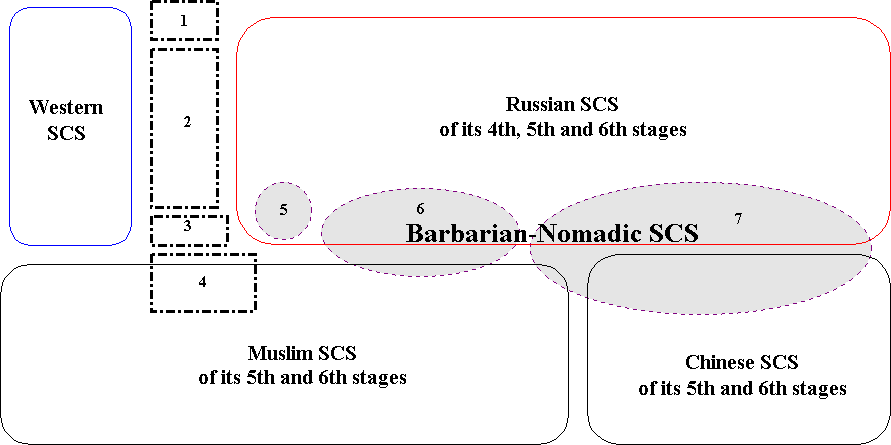
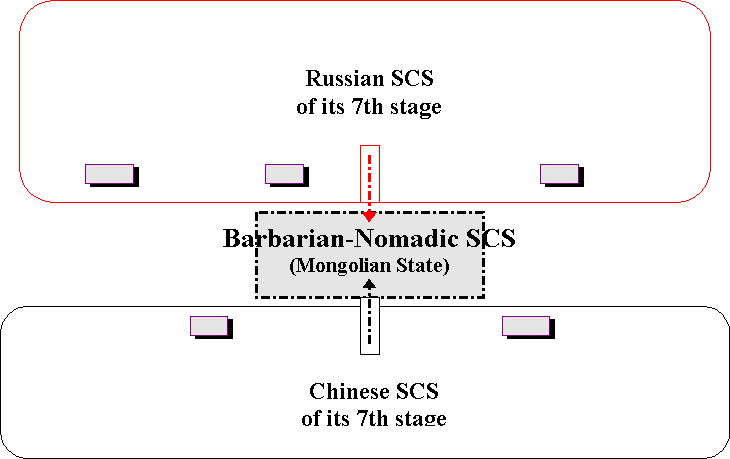
Model 7. Establishing the Barbarian-Nomadic SCS residual homeland and population
on the borders of Russian and Chinese SCS-s as their external buffer zone
(from the second half of the XX century and for some future)
 |
6.2. MUSLIM SCS
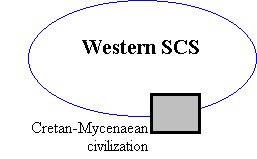
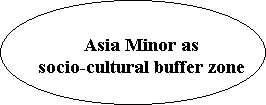
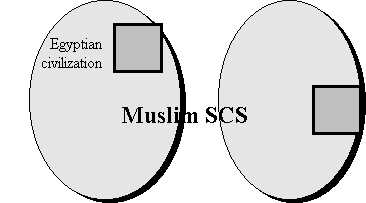
Model 8. Initial sporadic colonization of the homeland territory in the most ancient civilizations and
unknown old centres of inhabitance (XXX - VII centuries BC)
 | |||||||
 | |||||||
 | |||||||
 |
|||||||
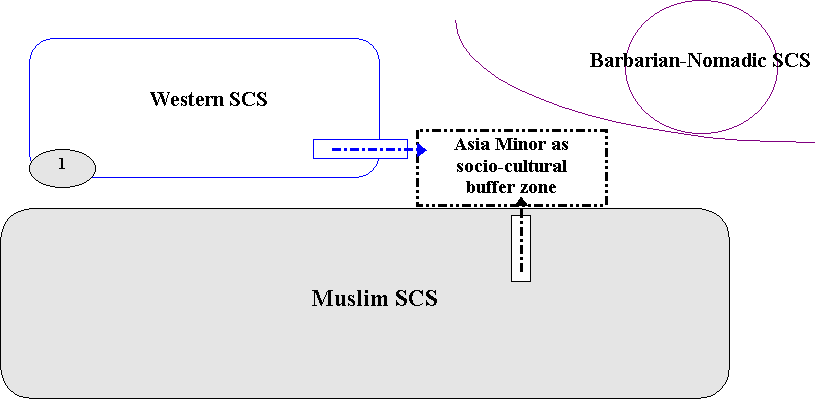
Model 9. Initial spatial defining of the Muslim SCS territory and its early acquisition in the form of Empires.
Conflict with Western SCS of its second stage for buffer spaces (750-s - 330-s BC)
 | |||
 |
|||
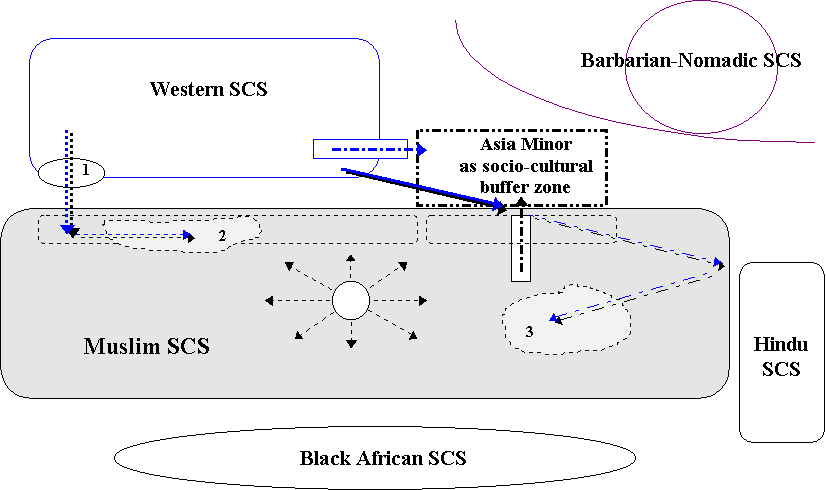
Model 10. Socio-cultural contest of Muslim SCS. Creating the internal buffer zones on borders with Western SCS. Assimilation of the other socio-cultural systems’ population within the Muslim territories
(from 330-s BC until early VII century AD)
 |
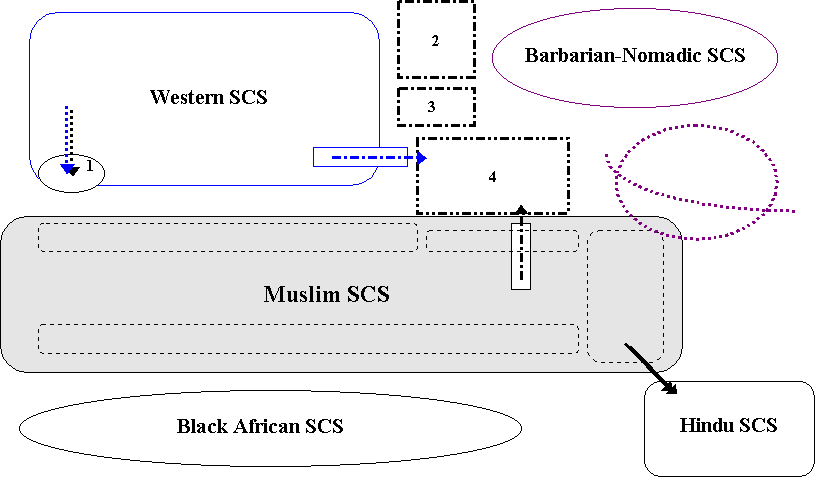
Model 11. Islam as the product of the socio-cultural contest; unification of the Muslim territories based on Islam. Beginning of the Muslim controlled spaces growth, and establishing the buffer zones between Muslim SCS and all of its neighbouring SCS-s (Western, Barbarian-Nomadic, Hindu and Black African) (early VII century - 1258)
 |
Model 12. Socio-cultural integration with Barbarian-Nomadic SCS. Further growth of the Muslim controlled
spaces into the territories of Black African and Hindu SCS-s. Creating the military-political vassals and buffer zones
with all the neighbouring SCS-s (1258 - early XVIII century)
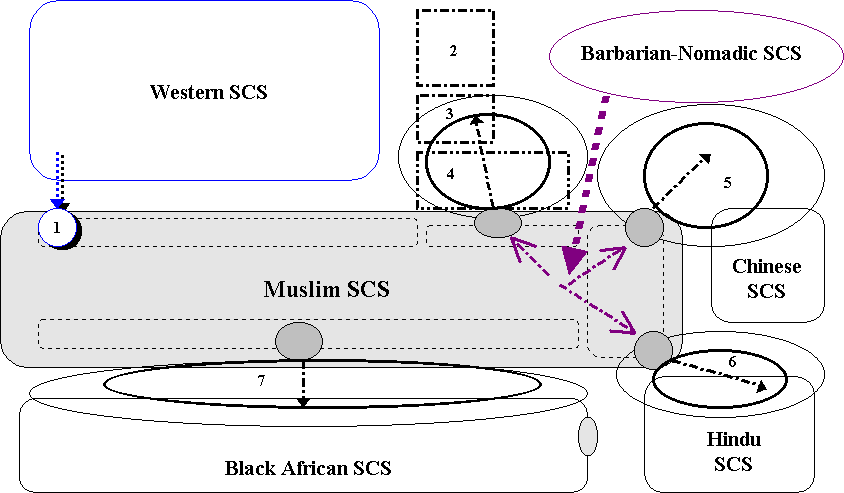
Model
13. Conflict for buffer spaces with various SCS-s. Loss of the military-political vassals and the alien
socio-cultural systems permanent presence in the Muslim homeland. Diffusion of the Muslim communities outside
the Muslim homeland (early XVIII century - 1970-s)
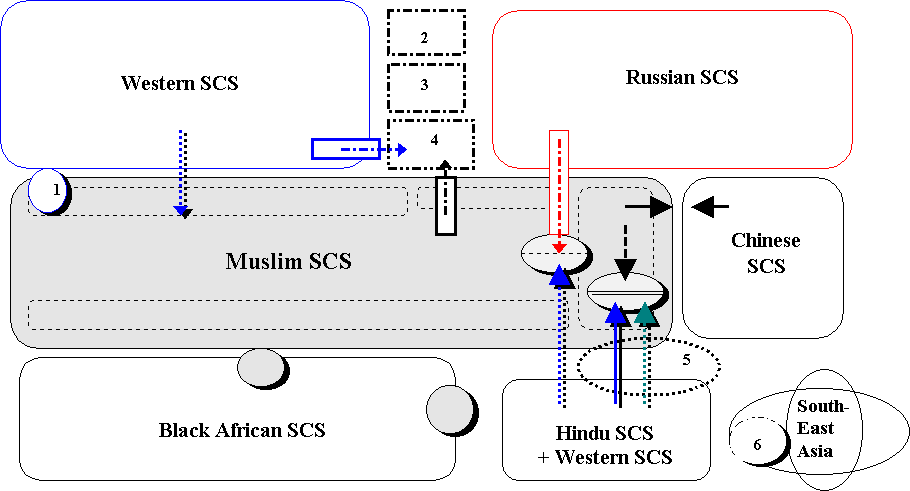
Model
14. Liberation of the Muslim homeland and its internal buffer zones from the alien socio-cultural
systems permanent presence. Political-geographical transformation of the Muslim SCS space based on its own socio-cultural standards. Conflict with other SCS-s
for the external buffer zones (from 1970-s and for some future)
 |

|
|
|
|
|

|
|
|
|
|





6.3. CHINESE SCS
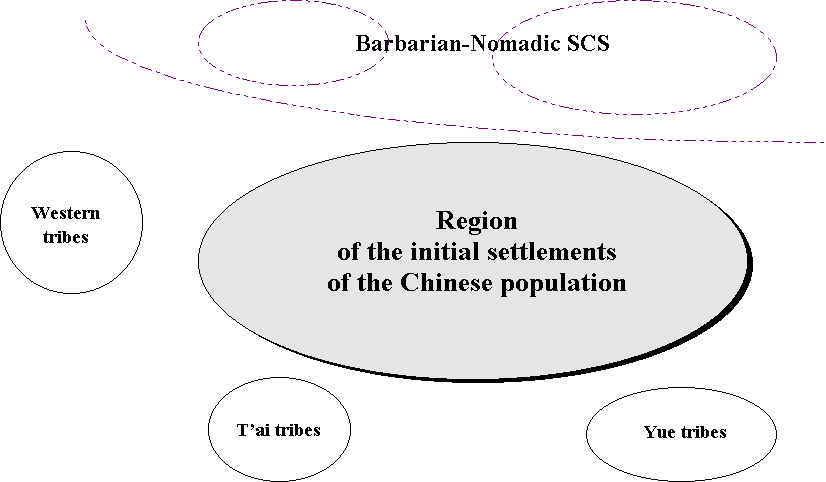
Model 15. Initial period of the Chinese population existence and Chinese SCS creation
(from legendary Hsia Dynasty 1800 - 1500 BC to Eastern Chou Dynasty 770 BC)
 |
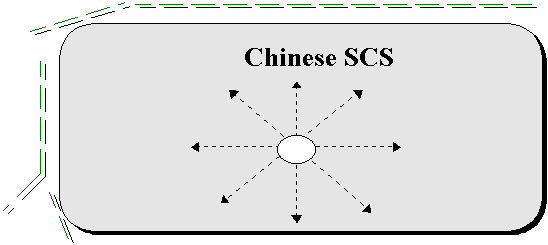
Model 16. Socio-cultural contest for creating the most efficient socio-cultural standard for Chinese SCS
(from 770 to 221 BC - Eastern Chou Dynasty)
 |
|||||||||
 |
|||||||||
 | |||||||||
 | |||||||||
 |
|||||||||
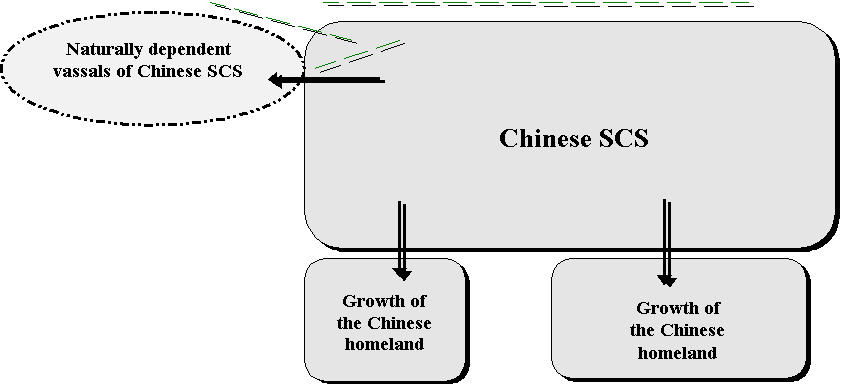
Model 17. Unification of the Chinese SCS territory based on the chosen socio-cultural standard.
Beginning of the homeland growth and establishing the naturally dependent vassals (221 BC - 317 AD)
 | |||
 | |||
Model 18. Creating the internal buffer zone on the North, new naturally dependent vassals on the West
and new homeland