Oxford's teachhing methods of english language
Guided note-taking

As teachers, we must decide what sort of help our students need for every task we assign. The guidance we give for taking notes will depend on various aspects. One of them is language level. Raimes suggests providing beginners with a skeleton outline to fill in or expand to make their listening more directed. She also proposes letting the advanced students listen to longer passages and make notes as they listen.
Guidance provided will depend on the degree of difficulty of the task involved. The reasons for taking notes and the follow-up activities are also important. If the students only take notes of simple figures, letters, or single words as the basis for a discussion to take place immediately, they will not need much guidance. But if they are supposed to take notes of a higher complexity to use in writing a report for homework, they will need more preparation.
Using
note-taking in our classes

Assuming an extreme position when defining the concept of note-taking, we can say that even checking or ticking items on a list is a form of note-taking, as long as what students have to "tick" represents the content of the reading or listening passage. If we give students a multiple-choice exercise, a list, or Yes/No questions, and ask them only to tick the correct answer, they will be taking notes. This could be considered the most basic form of note-taking. Nevertheless, if we analyze the task in detail, we find it is not as simple as it seems. To answer accurately, the students will first have to understand the statements and determine whether their choices are correct or not. Furthermore, they have to predict and speculate about what they are going to perceive.
When revising any topic we may practice it and use this technique giving students a skeleton to fill in while listening. Example:
|
Hypertension |
|||
|
Instructions:
|
|||
|
Patient's name: |
Mrs. Kelly. | ||
|
Main Symptoms: |
high blood pressure headache | ||
| dizziness | |||
|
Other Symptoms: |
obesity | blurred vision | |
| trouble breathing | swollen ankles | ||
| urinary problems | pain in the back | ||
| chills and fever | |||
|
Past History: |
heart disease | chest pain | |
| kidney infection | |||
|
Family History |
hypertension | diabetes | |
| kidney disease | stroke | ||
| heart attack | |||
|
Any other information? |
|||
With
this last question, we are prompting the students to note down other
information, not limiting them only to what the chart asks for. Not
all the students will be able to take further notes, but the most
skilled will not get bored while their classmates are engaged at a
more elementary level.
Another instance that calls for note-taking is reporting on medical cases. To do this, the class may be divided into teams of three or four students. Each team prepares a case for the others to analyze. One variant would be having each team first brainstorm, then prepare a skeleton outline with the sort of information they need the other team to provide in order to write a full case report. Once ready, they exchange skeletons, brainstorm again, and note down the information the skeleton forms ask for. The teams should give neither the diagnosis nor the treatment. As soon as they finish, they swap these "problem-cases," analyze them, and confer on the diagnosis, treatment, and prognosis of the patient. Next, they write a full case report that everyone reads and discusses. The class then moves around, reads, and comments on them. Finally, they decide which of the skeleton forms are better and which reports are the most coherent and faithful to the information provided.
A simpler variant would be having each team ask for the information orally from one another, take notes on it and then report on the case orally or in writing.
In teaching Medically Speaking , I suggest taking notes while listening to the dialogues or reading the case studies given in the text. Instead of having the students take down all the information, teams are formed to take notes on specific parts.
Appendix
|
Instructions for preparing and presenting a case report |
||
| First think of an interesting case you would like to report on and discuss with your classmates. Consult your professors, look for information about your case and associated diseases or cases in magazines, books, journals, etc. Note down this information. Then make an outline of the elements you need in order to report on a case | ||
|
1.
Patient's |
Age: | Sex: Race: |
| Weight: | Height: | |
| 2. Main symptom: | 8. Physical findings | |
| 3. Other symptoms: | 9. Diagnostic procedure: | |
| 4. Past history: | 10. Differential and definitive diagnosis: | |
| 5. Family history: | 11. Therapeutic procedures: | |
|
6. (Toxic) habits: |
12. Possible complications | |
| 7. Medications: | 13. Prognosis | |
Before presenting your case orally, copy the outline on the board, ask your classmates to also copy it in their notebooks. You will all follow this order for the presentation and discussion of your case. Your classmates will ask you for the data they need to complete their outlines and discuss the case. Once the discussion is over, they will use their notes to write a report on the case you presented.
|
Patient's characteristics: Age: 22 |
Race: white Sex: M |
|
|
Weight: 70 kg. |
Height: 1.70m. |
|
| Main symptom: |
pain in the right lower quadrant (sporadic and colicky in nature) |
|
|
*began in epigastrium two days ago |
||
|
*moved to periumbilical region and right lower quadrant |
||
| Other symptoms: |
fever, vomits (3), anorexia, constipation for two days (no bowel movement). No diarrhea |
|
| Past history: |
-none |
|
| Family history: |
-none |
|
| Toxic habits: |
-none |
|
| Medications: |
-none |
|
| Physical findings: |
-patient well
oriented as to time, place and |
|
|
-well nourished |
||
|
-extreme tenderness
to palpation mainly |
||
|
-guarding, muscle
rigidity, rebound |
||
|
-difference: axillary & rectal temperature |
||
|
-bowel sounds: absent |
||
|
Definitive diagnosis: acute appendicitis |
||
|
Therapeutic procedures:
appendectomy |
||
Report
Today we discussed
the case of a 22-year-old white man who was in good health prior to
two days ago, when he began to have an abdominal pain. This pain was
sporadic and colicky in nature. It began in the epigastrium and has
since migrated to the right lower quadrant. The patient has had three
episodes of vomiting associated with the pain. He has been anorectic
and feverish. He has had no bowel movements for two days. He reported
no diarrhea, coughing with expectoration or shortness of breath. He
has no past history or family history of abdominal pain or any other
disease. The pertinent physical findings are related to the abdomen.
There is extreme tenderness to palpation, especially over McBurney's
point. Guarding, muscle rigidity and rebound tenderness are all
present. Bowel sounds are absent. There is a difference between the
axillary and the rectal temperature. His urinalysis, hemoglobin and
hematocrit are within normal limits. Nevertheless, both white blood
count and red rate are elevated. His chest film is clear, but in the
abdominal film we observed the psoas line is absent.
Finally, we
decided the definitive diagnosis is acute appendicitis. Among the
possible complications to consider are perforation, necrosis and
peritonitis. Therefore, the prognosis is anceps. The only possible
treatment is surgical: appendectomy.
Conclusion

As we have seen, there are numerous opportunities to help students develop the skill of note-taking. Note-taking assists the listener, reader, or observer in achieving a better understanding of what is presented, and it facilitates recall of facts as well as oral and written expression. The student's language level and the purpose which the notes are to serve will determine the type of guidance the teacher must provide to help them to take notes in class and later on the job.
Grammar games
Competitive games
Speed
Grammar: |
Collocations with wide, narrow, and broad. |
Level: |
Intermediate to advanced |
Time: |
15-20 minutes |
Materials: |
Three cards, with wide on one, narrow on the second and broad on the third |
Preparation
Prepare three large cards with wide on one, narrow on the second and broad on the third.
In class
Clear as much space as you can in your classroom so that students have access to all the walls and ask two students to act as secretaries at the board. Steak each of your card on one of the other three walls of the room. Ask the rest of the students to gather in the middle of the space.
Tell the students that you’re going to read out sentences with a word missing. If they think that the right word for that sentence is wide they should rush over and touch the wide card. If they think the word should be narrow or broad they touch the respective card instead. Tell them that in some cases there are two right answers (they choose either).
Tell the secretaries at the board to write down the correct versions of the sentences in full as the game progresses.
Read out the first gapped sentence and have the students rush to what they think is the appropriate wall. Give the correct versions and make sure it goes up in the board. Continue with the second sentence etc.
At the end of the strenuous part ask the students to tale down the sentences in their books. A relief from running! ( If the students want a challenge they should get a partner and together write down as many sentences as they remember with their backs to the board before turning round to complete their notes. Or else have their partner to dictate the sentences with a gap for them to try to complete.)
Sentences to read out
|
They used a … angled lens |
Wide |
|
He looked at her with a … smile |
Broad |
|
The socialists won by a …. Margin |
Narrow/broad |
|
She is very … minded |
Broad/narrow |
|
He speaks the language with a … London accent |
Broad |
|
You were wrong what you said was … of the mark |
Wide |
|
You had a … escape |
Narrow |
|
Of course they’re … open to criticism |
Wide |
|
They went down the canal in a … boat |
Narrow |
|
She opened her eyes … |
Wide |
|
The news was broadcast nation … |
Wide |
|
The path was three meters … |
Wide |
|
The light was so bright that she … her eyes |
Narrowed |
Variation
You can play this game with many sets of grammar exponents:
Forms of the article; a, the and zero article
Prepositions
Etc.
Cognitive games
Spot the differences
Grammar: |
Common mistakes |
Level: |
Elementary |
Time: |
20-30 minutes |
MThis activity can be adapted for use with all levels aterials: |
One copy of Late-comer A and Late-comer B for each student |
In class
Pair the students and give them the two texts. Ask them to spot all the differences they can between them. Tell them that there may be more than one pair of differences per pair of parallel sentences. Tell them one item in each pair of alternatives is correct.
They are to choose the correct form from each pair.
|
Late-comer A |
Late-comer B |
|
This women was often very late |
This woman was often very late |
|
She was late for meetings |
She was late for meeting |
|
She were late for dinners |
She was late for dinners |
|
She was late when she went to the cinema |
She was late as she went to the cinema |
|
One day she arrive for a meeting half an hour early |
One day she arrived for meeting half ah hour early |
|
Nobody could understand because she was early |
Nobody couldn’t understand why she was early |
|
‘Of course,’ someone said, ‘clocks put back last night.’ |
‘Of course,’ someone say, ‘the clocks were put back last night.’ |
3. Ask them to dictate the correct text to you at the board. Write down exactly what they say so students have a chance to correct each other both in terms of grammar and in terms of their pronunciation. If a student pronounces ‘dis voman’ for ‘this woman’ then write up the wrong version. Only write it correctly when the student pronounces it right. Your task in this exercise is to allow the students to try out their hypotheses about sound and grammar without putting them right too soon and so reducing their energy and blocking their learning. Being too kind can be cognitively unkind.
Variation
To make this exercise more oral, pair the students and ask them to sit facing each other. Give Later-comer A to one student and Late-comer B to the other in each pair. They then have to do very detailed listening to each other’s texts.
Feeling and grammar
Typical questions
Grammar: |
Question formation-varied interrogatives |
Level: |
Beginner to elementary |
Time: |
20-30 minutes |
Materials: |
None |
I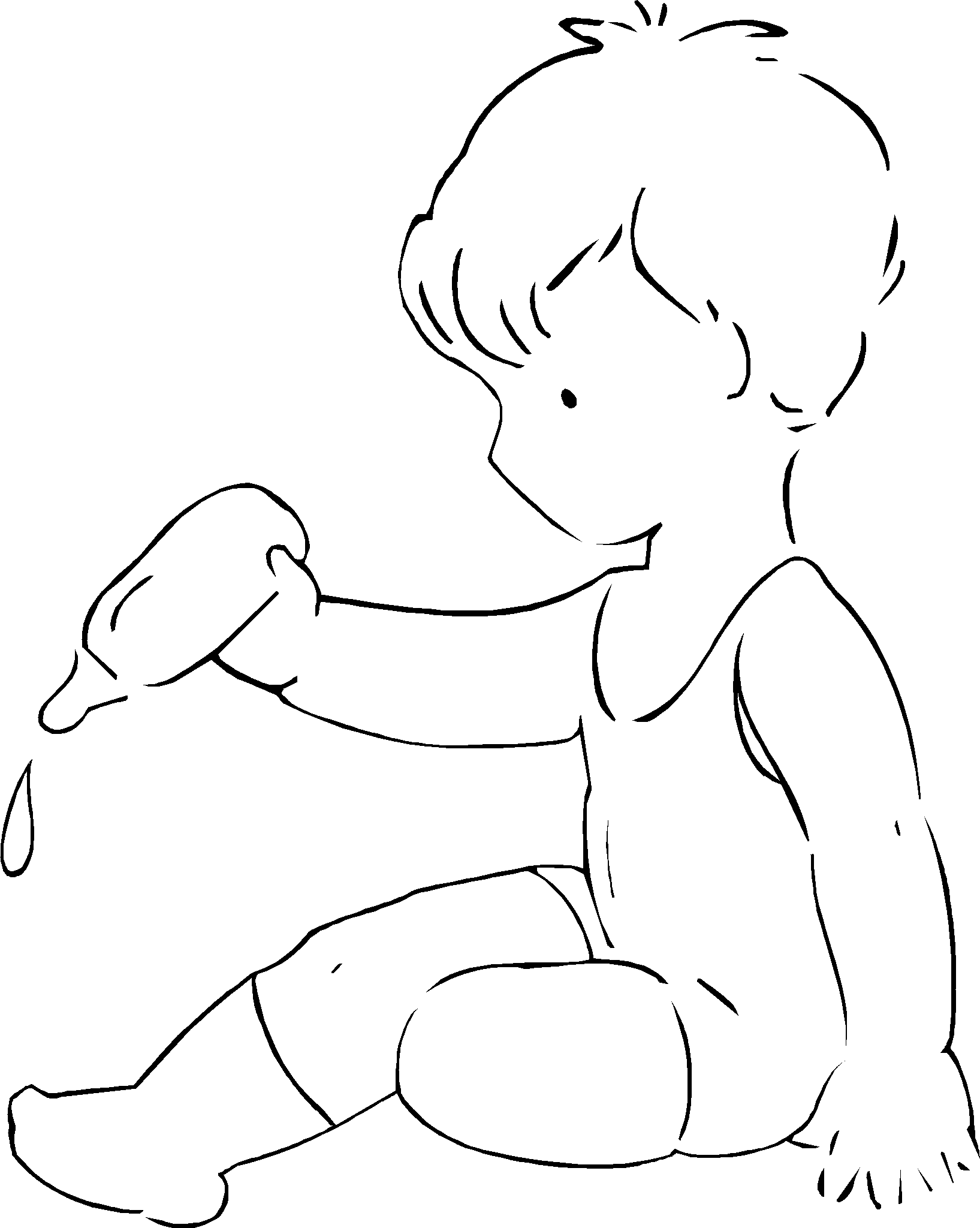 n
class
A
 sk
the students to draw a quick sketch of a four-year-old they know
well. Give them these typical questions such a person may ask, e.g.
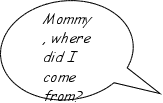
‘Mummy, does the moon go for a wee-wee?’ ‘Where
did I come from?’. Ask each student to write half a dozen
questions such a person might ask, writing them in speech bubbles on
the drawing. Go round and help with the grammar.
Get the students to fill the board with their most interesting four-year-old questions.
Variations
This can be used with various question situations. The following examples work well:
Ask the students to imagine a court room-the prosecution barrister is questioning a defense witness. Tell the students to write a dozen questions the prosecution might ask.
What kind of questions might a woman going to a foreign country want to ask a woman friend living in this country about the man or the woman in the country? And what might a man
Если Вам нужна помощь с академической работой (курсовая, контрольная, диплом, реферат и т.д.), обратитесь к нашим специалистам. Более 90000 специалистов готовы Вам помочь.Бесплатные корректировки и доработки. Бесплатная оценка стоимости работы.Нужна помощь в написании работы?Мы - биржа профессиональных авторов (преподавателей и доцентов вузов). Пишем статьи РИНЦ, ВАК, Scopus. Помогаем в публикации. Правки вносим бесплатно.