Nonlinear multi-wave coupling and resonance in elastic structures
 .
This equation can be rewritten in a standard form
 ,
where
 ,
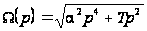 ,
 .
At
,
a solution this equation reads
 ,
where the natural frequency satisfies the dispersion relation
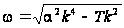 .
If
 ,
then slow variations of amplitude satisfy the following equation

where
 ,
denotes the group velocity of the amplitude envelope. By averaging
the right-hand part of this equation according to (17), we obtain
 ,
at
 ;
,
at
 and
 ;
 in any other case.
Notice,
if the eigen value of
 approaches zero, then the first-order resonance always appears in the
system (this corresponds to the critical Euler force).
The
resonant properties in most mechanical systems with time-depending
boundary conditions cannot be diagnosed by using the function
 .
Example
2. Consider the equations (4) with the
boundary conditions
 ;
 ;
 .
By reducing this system to a standard form and then applying the
formula (17), one can define a jump of the function
provided the phase matching conditions
 и
 .
are
satisfied. At the same time the first-order resonance, experienced by
the longitudinal wave at the frequency
 ,
cannot be automatically predicted.
References
Nelson DF, (1979), Electric, Optic and Acoustic Interactions in Dielectrics, Wiley-Interscience, NY.
Kaup P. J., Reiman A. and Bers A. Space-time evolution of nonlinear three-wave interactions. Interactions in a homogeneous medium, Rev. of Modern Phys., (1979) 51 (2), 275-309.
Kauderer H (1958), Nichtlineare Mechanik, Springer, Berlin.
Haken H. (1983), Advanced Synergetics. Instability Hierarchies of Self-Organizing Systems and devices, Berlin, Springer-Verlag.
Kovriguine DA, Potapov AI (1996), Nonlinear wave dynamics of 1D elastic structures, Izvestiya vuzov. Appl. Nonlinear Dynamics, 4 (2), 72-102 (in Russian).
Maslov VP (1973), Operator methods, Moscow, Nauka publisher (in Russian).
Jezequel L., Lamarque C. - H. Analysis of nonlinear dynamical systems by the normal form theory, J. of Sound and Vibrations, (1991) 149 (3), 429-459.
Pellicano F, Amabili M. and Vakakis AF (2000), Nonlinear vibration and multiple resonances of fluid-filled, circular shells, Part 2: Perturbation analysis, Vibration and Acoustics, 122, 355-364.
Zhuravlev VF and Klimov DM (1988), Applied methods in the theory of oscillations, Moscow, Nauka publisher (in Russian)
1
The small parameter
 can also characterize an amount of small damped forced and/or
parametric excitation, etc.
2
The discrete part of the spectrum can be represented as a sum of
delta-functions, i.e.
 .
3
The resonance appears in the system as
 that corresponds to any integer number of quarters of wavelengths.
There is no stationary solution in the form of standing waves in
this case, though the resonant solution for longitudinal waves can
be simply designed using the d'Alambert approach.
4The conservation of quasi-periodic orbits represents a forthcoming mathematical problem in mathematics, which is in progress up to now [4].
5
Practically, the resonant properties should be directly associated
with the order of the approximation procedure. For instance, if the
first-order approximation is considered, then the resonances in
order
 have to be neglected.
6
In applied problems the definition of resonance should be directly
associated with the order of the approximation procedure. For
instance, if the first-order approximation is considered, then the
jupms of
 of order
 have to be neglected [9].