The History of Alaska (история Аляски)
Municipal Educational Institution
Lyceum № 130 “RAVES”
Exam paper.
The History of Alaska.
Student: Protopopova N.S., M-111
Teacher: Shipulina O.N.
Barnaul, 2005
Contents:
Introduction……………………………………………………………………………………………………….……3
1. Origins of Alaska’s Groups……………………………………………………………………..…………4
The Eskimos
The Aathabascans
Aleuts
The Northwest Coast Indians
2. From the Russian Empire to the USA……………………………………………………………7
3. Alaska today………………………………………………………………………………………………………..8
Geography
Government
Business
Transport
4. The most important dates in the history of Alaska……………………….…………11
Conclusion………………………………………………………………………………………………………………..17
The list of literature………………………………………………………………………………………….…18
Introduction.
Undoubtedly, the history is one of the most interesting and most important sciences. It incorporates experience of each person and all mankind. The history acquaints us with process of development of a mankind. Behind acts and decisions of separate people, behind actions of weights there is a bright, many-sided and unique image of the world, different continents, the countries and people. To understand history of the Native land, it is necessary to understand world history. In the exam paper I will tell about history of Alaska – history, which connects two great powers - Russia and the USA. The purpose of the given work is to study political and social life of Alaska, its daily life, material, spiritual and religious culture. I will tell about the reasons and consequences of historical events of Alaska, I will cite statistical data. To be prepared of this exam paper I used the educational and scientific literature and materials of periodic printed editions.
1. Origins of Alaska’s Native Groups.

No
one knows exactly
when people first found the land that would be called Alaska. Some
anthropologists believe that people migrated from Asia to North
America 40,000 years ago. Others argue it was as recent as 15,000
years ago.
Whenever, the consensus is that they came from Asia by
way of a northern land bridge that once connected Siberia and Alaska.
That land bridge, now recalled as Beringia, was the first gateway
to Alaska. But these first visitors were hardly tourists intent on
exploring new worlds. Rather they were simply pursuing their
subsistence way of life as they followed great herds of grazing
mammals across the grassy tundra and gentle steppes of Beringia.
Some groups settled in the Arctic. Others traversed the mountain
passes to other parts of Alaska. While still others migrated through
Alaska, continuing on to distant lands--perhaps as far as South
America.
Those who made Alaska their permanent home make up the
state’s four major anthropological groups: Eskimos, Aleuts,
Athabascans, and Northwest Coast Indians.
While all four groups
shared certain basic similarities--all hunted, fished and gathered
food--they developed distinctive cultures and sets of skills.
The Eskimos:
Flexible
Residents of the Arctic.
The
Eskimos were primarily a coastal people, setting along the shores of
the Arctic and Bering seas.
For millennia they lived a simple,
subsistence life--much as they still do today--by harvesting the fish
and mammals of the seas, the fruits and game of the land. Somehow
they learned how to thrive despite the demanding conditions of the
Arctic.
Their sense of direction was keen, almost uncanny.
Travelling in a straight line, sometimes through snowstorms and
whiteouts, they found their way around the mostly featureless terrain
by noting wind direction, the position of the stars, the shape and
size of a snowdrift. And they were resourceful. In a land where the
summer sun stays at eye-level for weeks on end, never setting below
the horizon, the Eskimos fashioned the first sun-visor--which also
doubled as a snow mask to protect their eyes from the wind-driven
snow.
The Athabascans:
Nomads
of the Interior.
Like the Eskimos, the Athabascans were skilful hunters, but they
depended more on large land mammals for their subsistence--tracking
moose and migrating caribou.
When it came to fishing, the
Athabascans were absolutely ingenious, snaring fish with hooks,
lures, traps and nets that are the fascination of modern day anglers
who visit their camps.
Generally nomadic, they lived in small,
simply organized bands of a few families, and whenever possible
pitched their camps in the sheltered white spruce forests of the
Interior. Some adventurous tribes, however, wandered all the way to
the Southwest United States to become kin to the Navajos and Apaches.
Aleuts:
Born
of the Sea.
For the Aleuts, life centred on the sea as they distributed
themselves among the 70-some islands in the Aleutian chain across the
North Pacific.
Life here was somewhat more benign that in the
Arctic, though wind storms were sometimes strong enough to blow rocks
around.
Since their food supply was rich, varied and readily
available, the Aleuts had time to develop a complex culture. Evidence
indicates that they practiced surgery and that their elaborate burial
rituals included embalming. Instruments utensils, even their boats
were made with amazing beauty and exact symmetry. And everything was
fashioned for a specific purpose--the Aleuts used 30 different kinds
of harpoon heads for different species of game!
Skilled
navigators and sailors, the Aleuts had the dubious distinction of
being the first to encounter the white man...Russian fur traders who
took them as slaves to harvest the fur seals in the Pribilofs.
The Northwest Coast Indians:
High
Society of Alaska’s southeast.
The milder, more temperate climate and an unlimited supply of
salmon and other seafood’s enabled the Northwest Coast Indians
to evolve a way of life quite different from the Eskimos, Aleuts and
Athabascans. They settled in year-round permanent villages, took
slaves and lived their lives according to the strict rules, rituals,
and regulations of their respective clans. Their artwork was nothing
less than masterful...beautiful blankets, finely woven cedar bark and
spruce root baskets magnificent totem creations.
Natives, who make up 15 percent of the state's population, maintain
many traditions, such as whaling, subsistence hunting and fishing,
and old ways of making crafts and art. Native heritage history and
culture can be found in such diverse places as Ketchikan, Anchorage
and Kotzebue, as well as in hundreds of villages where people live in
traditional ways.
But while Native culture, as a whole, may
define much of Alaska's appearance, the state contains a broad
mixture of cultures. In Anchorage, for example, the school district
has found that its student body comes from homes that speak 83
languages. Anchorage, the state's biggest city, has many Alaska
influences but is also sometimes called Los Anchorage for its Lower
48-style architecture and mannerisms. Most residents of Alaska were
born outside the state, and when they came to Alaska they brought
their own traditions and desires.
There are European influences
as well. Petersburg, in the Inside Passage, has a strong Scandinavian
heritage. Cordova and Valdez bear names bestowed by a Spanish
explorer; Cook Inlet is named for a British explorer; Russians left a
legacy of the
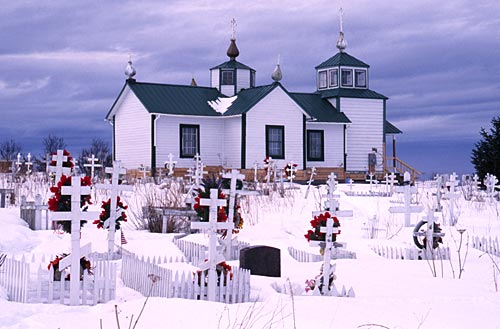
Orthodox Church
in much of the state.
2. From the Russian Empire to the United States of America.
The first written accounts indicate that the first Europeans to reach Alaska came from Russia. Vitus Bering sailed east and saw Mt. St. Elias. The Russian-American Company hunted otters for their fur. The colony was never very profitable, because of the costs of transportation.
At
the instigation of U.S. Secretary of State William Seward, the United
States Senate approved the purchase of Alaska from Russia for
$7,200,000 on 9 April 1867, and the United States flag was raised on
18 October of that same year (now called Alaska Day). The first
American governor of Alaska was Włodzimierz
Krzyżanowski.
The 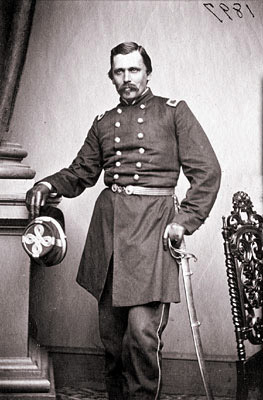 purchase
was not popular in the continental United States, where Alaska became
known as "Seward's Folly" or "Seward's Icebox".
Alaska celebrates the purchase each year on the last Monday of March,
calling it Seward's Day.
P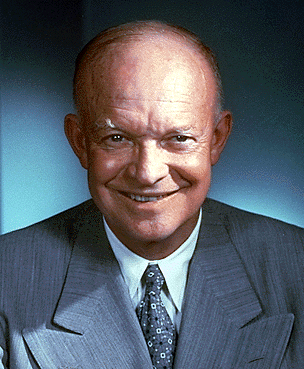 resident
Dwight
D.
Eisenhower
signed the Alaska Statehood Act into United States law on 7 July 1958
which paved the way for Alaska's admission into the Union.
The name "Alaska" is most likely derived from the Aleut word for "great country" or "mainland." The natives called it "Alyeska", meaning "the great land." It is bordered by the Yukon Territory and British Columbia, Canada to the east, the Gulf of Alaska and the Pacific Ocean to the south, the Bering Sea, Bering Strait, and Chukchi Sea to the west, and the Beaufort Sea and the Arctic Ocean to the north.
In 1976, the people of Alaska amended the state's constitution, establishing the Alaska Permanent Fund. The fund invests a portion of the state's mineral revenue, including revenue from the Trans-Alaskan Pipeline System, 'to benefit all generations of Alaskans.' In June 2003, the fund's value was over $24 billion.
Over the years various vessels have been named USS Alaska, in honor of the state.
During World War II outlying parts of Alaska were occupied by Japanese troops. It was the only part of the United States to have land occupied during the war.
3. Alaska today.
Geography.
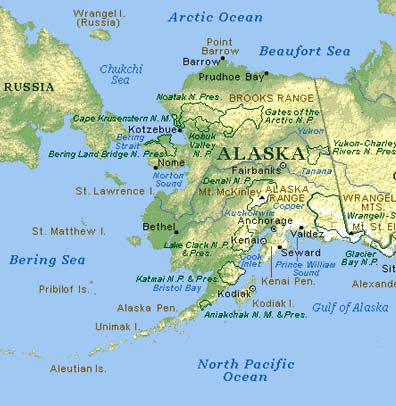 Alaska
is the only state that is both in North America and not part of the
48 contiguous states. Alaska is the largest state in the United
States in terms of land area, 570,374 square miles (1,477,261 kmІ).
If you superimposed a map of Alaska on the Lower 48 states, Alaska
would stretch from Minnesota to Texas
and from Georgia to California.
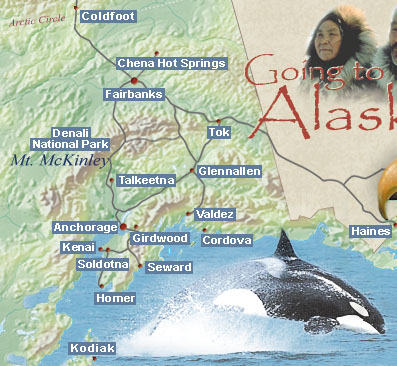
One scheme for describing the state's geography is by labeling the regions:
• South Central Alaska is the southern coastal region with towns, cities, and petroleum industrial plants;
• The Alaska Panhandle, also known as Southeast Alaska, is home to towns, tidewater glaciers and extensive forests;
• the
Alaska Interior has big rivers, such as the Yukon River and the
Kuskokwim River, as well as Arctic tundra lands and shorelines; and
• The Alaskan Bush is the remote, uncrowned part of the state.
Alaska, with its numerous islands, has nearly 34,000 miles (54,700 km) of tidal shoreline. The island chain extending west from the southern tip of Alaska is called the Aleutian Islands. Many active volcanoes are found in the Aleutians.
Alaska is the easternmost state in the Union. The Aleutian Islands actually cross longitude 180°.
Alaska's most populous city is Anchorage, home of 260,284 people, 225,744 of whom live in the urbanized area. It ranks a distant third in the List of U.S. cities by area. Sitka ranks as the America's largest city by area, followed closely by Junea.
Government.
Much of Alaska is managed by the federal government as national forests, national parks, and national wildlife refuges. There are places in Alaska that are general public lands (BLM land) but they are arguably more spectacular than many national parks in the Lower 48. Many of Alaska's state parks would be national parks if they were in other states.
M