Synchronization and sommerfeld effect as typical resonant patterns
|
|
|
|
|
|
|
|
|
|
|
|
|
| 1 | 0.1 | 1 | 1 | 0.5 | 0.5 | 1 | 1 | 0.751 | 0.75 | -0.244 | -0.204 |
| 2 | 0.1 | 1 | 1 | 0.5 | 0.5 | 1 | 1 | 0.251 | 0.25 | -0.072 | 0.008 |
| 3 | 0.1 | 1 | 1 | 0.6 | 0.4 | 1 | 1 | 0.25 | 0.25 | -0.075 | -0.001 |
| 4 | 0.1 | 1 | 1 | 0.6 | 0.4 | 1 | 1 | 0.251 | 0.25 | -0.075 | 0.009 |
| 5 | 0.1 | 1 | 1 | 0.6 | 0.4 | 1 | 1 | 1.25 | 1.25 | 0.239 | -0.085 |
| 6 | 0.1 | 1 | 1 | 0.5 | 0.5 | 1 | 1 | 0.26 | 0.25 | 0.998 | -0.007 |


The matching condition
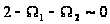 .
After substitution from the expressions (3) into
the standard form of equations (2), separation of fast and slow
motions within the first-order approximation in the small parameter
 ,
under the assumption that
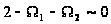 ,
one obtains the following evolutionary equations
 ;
(9)
 ,
where

is the new slow variable (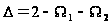 ),
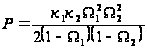
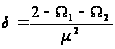 is the small detuning. The coefficients of eqs. (9) are as it
follows:
 ;
 ;
 ;
 .
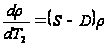
The resonance of this type, as already mentioned, has no practical significance. Let the detuning be zero, then these equations (9) are highly simplified up to the full their separation:
 ;
(10)
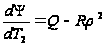 .
The formal criterion of stability is extremely
simple. Namely, the coefficient of the resonant excitation of
vibrations in the base
 exceeds no the rate of energy dissipation
 ,
i. e.
 ,
but the synchronization is awfully destroyed at any positive values
of other parameters.
synchronization phase resonant pattern
Conclusions
Synchronous rotations of drivers are almost idle and required no any high-powered energy set in this dynamical mode. Most responsible treatment for the drivers is their start, i. e. a transition from the rest to steady-state rotations [14]. So that, the utilizing vibration absorbers for high-powered electromechanical systems has advantageous for the two main reasons. On the one hand it provides a control tool for substantially mitigating the effects of transient shocking loads during the time of growth the acceleration of drivers. This contributes to integrities of the electromechanical system and save energy. On the other hand there is an ability to configure the appropriate damping properties of vibration absorbers to create a stable regime of synchronization when it is profitable, or even get rid of him, to destroy the synchronous movement, creating conditions for a dynamic interchange of drivers.
Acknowledgments
The work was supported in part by the RFBR grant (project 09-02-97053-р поволжье).
References
Appleton E. V. The automatic synchronization of triode oscillator (J), Proc. Cambridge Phil. Soc., 1922, 21: 231-248.
Van der Pol B. Forced Oscillations in a circuit with non-linear resistance (J), Phil. Mag., 1927, 3: 64-80.
Andronov A. A, Witt A. A. By the mathematical theory of capture (J), Zhurn. Math. Physics., 1930, 7 (4): 3-20.
Andronov A. A, Witt A. A. Collected Works. Moscow: USSR Academy of Sciences, 1930: 70-84.
Arnold V.I. Geometrical methods in the theory of ordinary differential equations, Springer-Verlag, 1988: 372.
Leonov G. A., Ponomarenko D. V., Smirnova V. B. Frequency-domain methods for nonlinear analysis (Proc.). Theory and applications. Singapore: World Sci., 1996: 498.
Blekhman I.I. Vibrational Mechanics. Singapore: World Sci., 2000: 509.
Blekhman I.I. Synchronization in Science and Technology, NY: ASME Press, 1988: 435.
Blekhman I.I., Landa P. S., Rosenblum M. G. Synchronization and chaotization in interacting dynamical systems (J), Appl. Mech. Rev., 1995, 11 (1): 733-752.
Samantaray A. K., Dasguptaa S. S. and R. Bhattacharyyaa. Sommerfeld effect in rotationally symmetric planar dynamical systems (J), Int. J. Eng. Sci., 2010, 48 (1): 21-36.
Masayoshi Tsuchidaa, Karen de Lolo Guilhermeb and Jose Manoel Balthazarb. On chaotic vibrations of a non-ideal system with two degrees of freedom: Resonance and Sommerfeld effect (J), J. Sound and Vibration, 2005, 282 (3-5): 1201-1207.
kovriguineda. ucoz
Haken H. Advanced Synergetics: Instability Hierarchies of Self-Organizing Systems and Devices. New York: Springer-Verlag: 1993: 465.
Rumyantsev S. A., Azarov E. B. Study of transient dynamics vibrating and transporting machines using a mathematical model (J) Transport of Ural, 2005, 4 (7): 45-51 (in Russian).
Размещено на