Teddy Roosevelt
C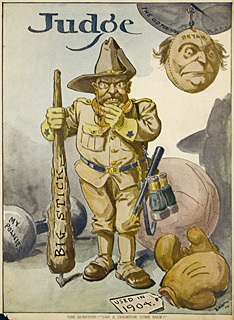 oaxed
by his political admirers, and personally dissatisfied with what he
considered to be President Taft's lack of leadership, Roosevelt
announced early in 1912 that he would run for a historic third
presidential term, if the GOP nomination were tendered to him. This
was a monumental decision on his part, one he made contrary to his
own established beliefs in the tradition of party loyalty, and
without the full backing of party leaders. Roosevelt was counting on
winning the support of the people, and was successful in those states
that had direct primaries. But in June, at the Republican convention
in Chicago, the party machine wrested control of the proceedings and
nominated President Taft easily after the Roosevelt delegates had
walked out. This was the start of the Progressive Party, in which
Roosevelt proudly accepted the nomination. The press was especially
happy to have him back in the running. From the moment he declared,
"My hat is in the ring," he became the most visible, if not
viable, candidate. Ultimately, Roosevelt would beat Taft in the
election, but he would lose to the Democratic candidate, Woodrow
Wilson. This cover of Judge,
August 6, 1910, raised "the question" from early on--"Can
a champion come back?"
Theodore Roosevelt once declared himself to be "as strong as a bull moose." The appellation stuck and the moose became the popular symbol for the Progressive Party under Roosevelt. This cartoon depicting the mascots of the major parties appeared in Harper's Weekly, July 20, 1912, just before the "Bull Moose" convention opened in Chicago.
Chronology of the Public Career of Theodore Roosevelt
1882-1884 - New York State Assemblyman
1889-1895 - United States Civil Service Commissioner
1895-1897 - New York City Police Commissioner
1897-1898 - Assistant Secretary of the Navy
1898 - Rough Rider
1899-1900 - Governor of New York
1901- Vice President of the United States
1901-1909 - President of the United States
Source
www.yahoo
npg.si.edu/exh/roosevelt/index.htm