Interpolation, approximation and differential equations solvers
For the case
 mentioned above inequality looks like:

Last result shows that integration step mast be less or
equal to
 .
For the case
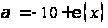 ,
for the iteration method coefficient looks like
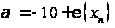

As step
 is positive value of the function
 must be less then
 .
There are two ways to define the best value of step
,
the firs one is to define maximum value of function
on the integration area, another way is to use different
 for each value
 ,
where
 .
So integration step is strongly depends on value of
.
References
J. C. Butcher, Numerical methods for ordinary differential equations, ISBN 0471967580
George E. Forsythe, Michael A. Malcolm, and Cleve B. Moler. Computer Methods for Mathematical Computations. Englewood Cliffs, NJ: Prentice-Hall, 1977. (See Chapter 6.)
Ernst Hairer, Syvert Paul Nшrsett, and Gerhard Wanner. Solving ordinary differential equations I: Nonstiff problems, second edition. Berlin: Springer Verlag, 1993. ISBN 3-540-56670-8.
William H. Press, Brian P. Flannery, Saul A. Teukolsky, William T. Vetterling. Numerical Recipes in C. Cambridge, UK: Cambridge University Press, 1988. (See Sections 16.1 and 16.2.)
Kendall E. Atkinson. An Introduction to Numerical Analysis. John Wiley & Sons - 1989
F. Cellier, E. Kofman. Continuous System Simulation. Springer Verlag, 2006. ISBN 0-387-26102-8.
Gaussian Quadrature Rule of Integration - Notes, PPT, Matlab, Mathematica, Maple, Mathcad at Holistic Numerical Methods Institute
Burden, Richard L.; J. Douglas Faires (2000). Numerical Analysis (7th Ed. ed.). Brooks/Cole. ISBN 0-534-38216-9.